Passage, retention, arrival
Arrival notes from US Peptide Importer
A skin experiment supplies two destinations: the far side and the tissue itself. I follow that complication into the larger peptide story.
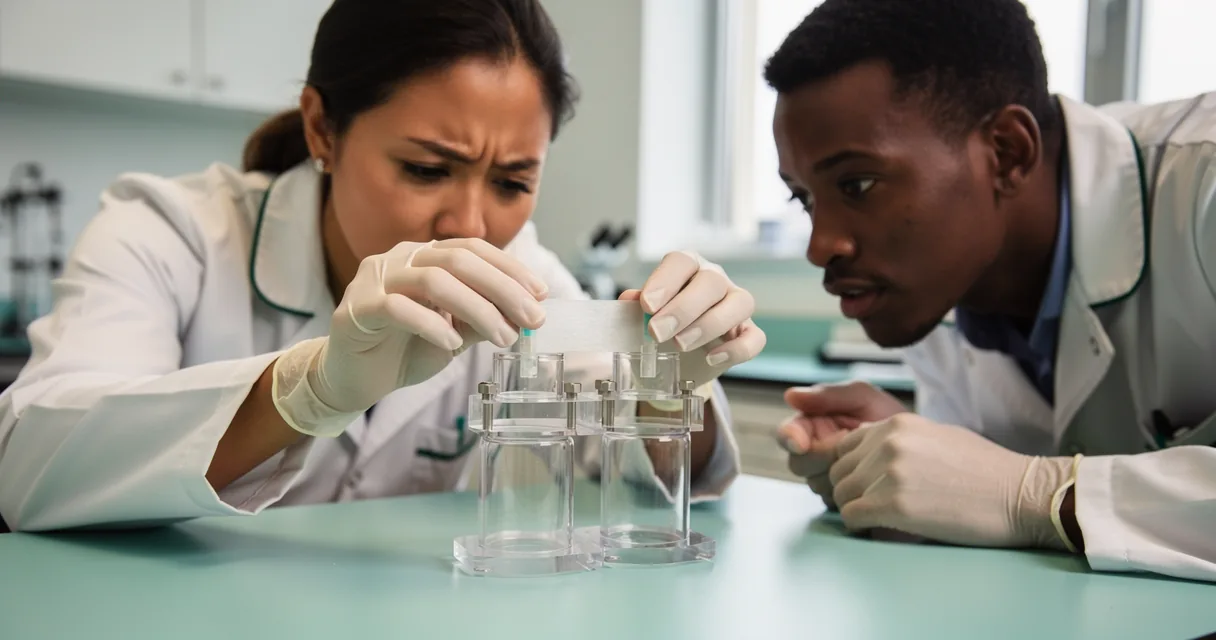
Copper in the receiving chamber
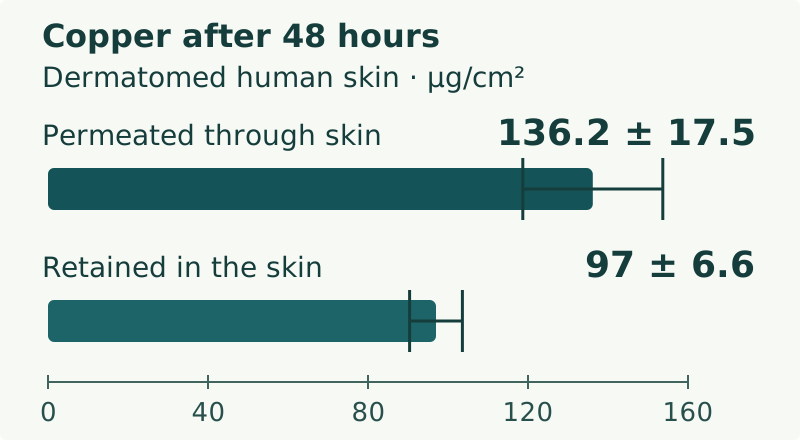
The skin itself became a destination. In a 2011 experiment with removed human skin, researchers applied a copper tripeptide and measured copper both passing through the prepared tissue and remaining within it. The retained material formed a dermal depot: a store in the skin.
Over 48 hours, 136.2 ± 17.5 μg/cm² of copper permeated dermatomed skin, while 97 ± 6.6 μg/cm² was retained as a dermal depot. These measurements concern copper in an experiment outside a living body. They establish neither wrinkle improvement nor the safety of an injection.
I’m surprised by skin acting as a copper reservoir. A story about getting an ingredient through a barrier can easily hurry past the tissue where some of it stays. Here, both destinations were measured, and the amount on the far side tells only some of what happened.
The delivery problem continues through the later review of topical GHK. Getting a promising ingredient to its intended place takes formulation work; the outer skin resists passage. I prefer that GHK-Cu delivery problem to a general claim about rejuvenation.
Other destinations
An importer’s concern with arrival has a surprisingly good fit with these papers. The destination changes the question. A compound may reach blood, a candidate may reach a human trial, and a medicine used overseas may still lack US approval.
Tirzepatide made the journey from an engineered gut-hormone peptide to large clinical comparisons. Its discovery paper included mice and an early human programme; the later weight and diabetes trials followed actual changes in people. I admire the distance covered there, while taking the stomach and bowel effects seriously.
BPC-157 has a different travel record. Its pharmacokinetic study followed the compound in rats and dogs, with different amounts reaching the circulation in the two species. Human healing claims still run well ahead of the small human dataset.
Thymosin alpha-1 brings the geographical border into focus. It has a history of medical use abroad and conflicting clinical results, including a large sepsis trial that failed to establish a survival benefit. Familiarity overseas and a convincing result in a particular illness are separate achievements.
The import papers
A parcel’s route can be documented more neatly than the contents can be understood. The papers may identify a sender, declared substance, quantity and entry decision. Product testing has to answer questions about identity, impurities and sterility; human studies have to answer questions about health effects.
For this site, the most useful meaning of “Importer” is a persistent interest in what arrives with a name. A published finding carries its species, treatment route and measured outcome with it. A shipping declaration carries a description of goods. Confusing the two gives the paperwork far too much authority.
I put the border questions together in the import-record comparison. For the physical crossing that starts this page, continue with GHK-Cu skin delivery.